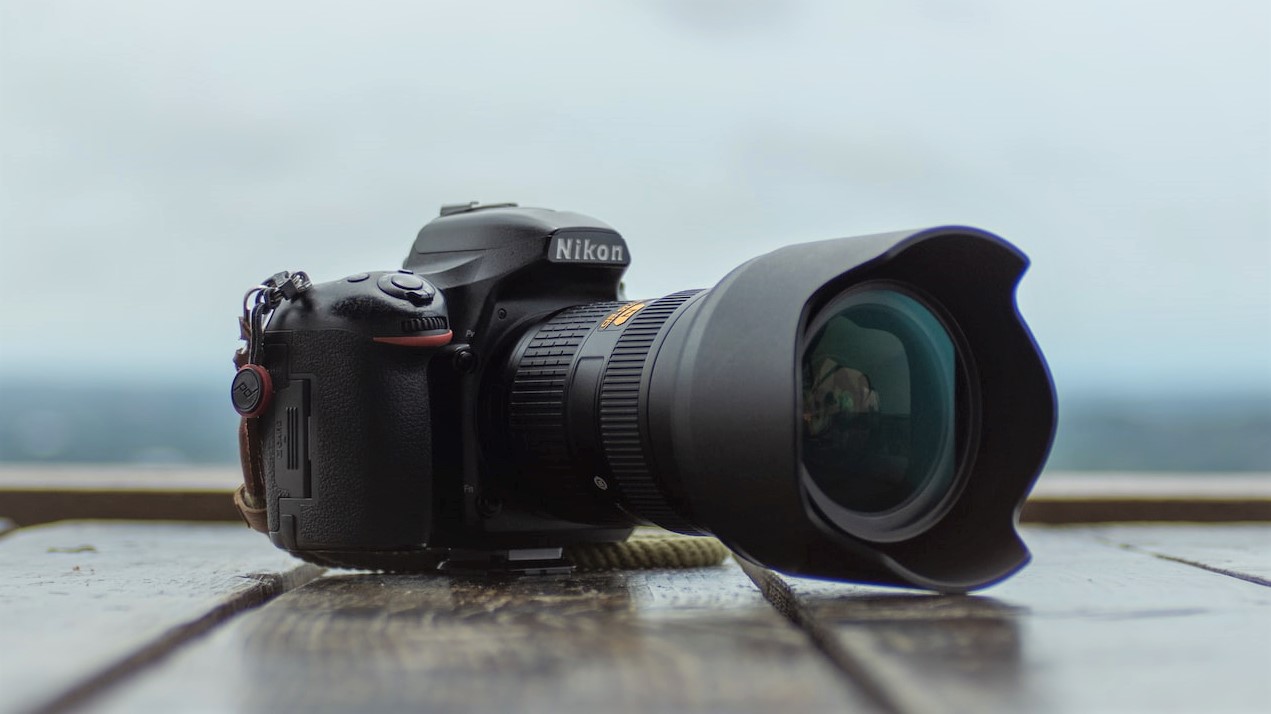
(Image credit: JD Gipson via Unsplash)
Choosing Cameras
There are many different types of cameras available in market today, from Compact to
DSLRs. Question arises which one should you choose? Well aside from reading endless specs, one way to
figure it out is to simply know the categories of cameras available to you. Do you want a mirrorless or a
quick point and shoot? Is a DSLR better for your occasional impromptu video shoots? It doesn't matter if
you are a hobbyist, professional, or a novice, at least one of the camera types should fit your needs once
you learn a little more about them. Knowing the different types of cameras will help you determine which
is best for your needs.The best DSLR or camera for you will also depend on the subject you intend to shoot
and the situation you intend to shoot in. Different DSLR models and lenses offer different benefits, but
armed with proper knowledge, the search for the right camera for you should be an easier one. So Let's
jump in.
What are the types of cameras 📸 ?
→Compact Cameras.→Smartphone Cameras.
→DSLR Cameras.
→Mirrorless Cameras.
→360-degree camera.
→Action Cameras.
1. Compact Camera.
The compact cameras, often referred to as a point-and-shoot cameras are standard cameras with limited settings.It is a still camera designed primarily for simple operation. Most of these compact cameras use focus free lenses or autofocus for focusing, automatic systems are used for setting the exposure options, and have flash units built in. They offer no real professional adjustable camera settings, but are incredibly easy to use and affordable. They are light-weight, user friendly , and you can just point to the subject and shoot to click the image. Now a days modern point-and-shoot cameras do come with few adjustable camera settings that do allow you to get a little more involved in the photography process. Point-and-shoot cameras have been by far the best-selling type of camera, as distinct from camera phones. However, point-and-shoot camera sales declined after about year 2010 as smartphones overtook them in such uses.👍🏼Pros: User-friendly, compact and light, affordable, no extra lenses needed.
👎🏼Cons: Limited camera settings, limited aperture, limited zoom range, small sensor creates more noise in images, slower focus.
2.Smartphone Camera📱
Now a days smartphones comes with hi specs which includes high end built-in camera function. Smartphone with a camera have become standard features of almost all smartphones. Phone cameras are now a highly competitive area of differentiation between models, with advertising campaigns commonly based on a focus on the quality or capabilities of a device's main cameras. They are giving tough competition to point-and-shoot cameras. Images in smartphone are usually saved in the JPEG file format; whereas some of the high-end phones also have RAW imaging capability.👍🏼Pros: Extremely user-friendly, compact and light, on screen display, affordable, no extra lenses needed.
👎🏼Cons: Limited camera settings, limited aperture, limited zoom range, small sensor creates more image noise.
3.DSLR Camera.
DSLRs (Digital Single-Lens Reflex Camera) as the name suggest, is a digital camera that combines the optics and the mechanisms of a single-lens reflex camera with a digital imaging sensor. In the reflex design, light travels through the lens and then to a mirror that alternates to send the image to either a prism, which shows the image in the viewfinder, or to the image sensor when the shutter release button is pressed. These cameras are the digital cameras that allows interchangeable lenses on the same camera body and are the go-to cameras for most creatives. Whether you are a professional photographer or aspiring videographer looking to get their YouTube channel. You will likely find this camera works for any project. They deliver exceptional, professional-level sharpness and even incredible background bokeh.While different DSLR cameras have different sensor sizes, these sensors are still large enough to capture enough pixels better than your smartphone camera image quality. The two primary sensor types are full-frame and APS-C. Full-frame camera sensors, which match the size of 35mm film, are the standard. APS-C sensors are slightly smaller, resulting in a lower focal length called the crop factor.
DSLR cameras allow you to combine the camera body with lens attachments of your choice, whether it is a fisheye lens or a telephoto(zoom) lens. you may go thru lens section for more details on different types Lenses.
Wildlife Photographers specially those who are into bird photography prefer APS-C sensor cameras as they provide extra crop factor which help them to get closer shots of subject. Whereas Full frame sensor cameras are preferred choice of landscape, wedding, and portrait photographers. DSLR cameras are very effective for shooting in low lighting, as they have a larger sensor that can capture more light as compared to smaller sensors of smartphones and compact cameras.
DSLRs also have better autofocus features compared to compact cameras as well as smartphone cameras, allowing you to focus and shoot faster to capture more high-quality images.
Conclusion: DSLRs are versatile in their ability to pair with many lenses and attachments, also have great battery life, and give you a higher shooting speed with better autofocusing; these are the reasons photographers love this type of camera which Can used for basic plus professional-level photography and videography.
👍🏼Pros: Optical viewfinder, completely customizable settings, high res photo and video output, variety of camera body types and lenses, larger sensors provide better image quality.
👎🏼Cons: Bulky, can be expensive.
4.Mirrorless Camera.
Mirrorless cameras are a lighter, more compact alternative to the DSLR, and provide incredible quality images, especially video. The camera body does not have a mirror that reflects light to the sensor, instead the light goes straight to the sensor. The very mechanics of the mirrorless automatically limit camera shake as compared to the DSLR. And with less moving parts, they are quieter than DSLRs. However, when it comes to lens options, it's somewhat limited both DSLR as well as Mirrorless cameras typically offer continuous shooting (also known as a burst mode) as well as image stabilization settings, but mirrorless cameras really shine over DSLR when it comes to video recording. To simplify, the mirror in a DSLR makes focusing video more difficult than with a mirrorless camera, which can better capture full HD video. Mirrorless cameras are also lighter and more compact, as the camera body needs space for only a sensor, instead of a whole mirror system.👍🏼Pros: light-weight and compact, quieter than DSLRs, no flicking mirror means no camera shake, very reliable for video, simpler controls, electronic viewfinder.
👎🏼Cons: Shorter battery life, slow autofocus, less lenses available.
4.360-degree camera.
In photography, 360-degree camera, also known as an omnidirectional camera ("omni", meaning all), is a camera having a field of view that covers approximately the entire sphere or at least a full circle in the horizontal plane. Omnidirectional cameras are important in areas where large visual field coverage is needed, such as in panoramic photography and robotics. They also can be mount on a ton of surfaces. They can be put on drones, helmets, cars, you name it. The best thing about these cameras is their ability to capture really interesting footage hence are great for adventure photography and videography too.br👍🏼Pros: Yields 360 degree photos and videos, live streaming capability, compact and lightweight, mountable on many surfaces.
👎🏼Cons:Digital viewing only, sensitive to shake, low resolution output, fixed focus.
5.Action Cameras.
As the name suggest the Action cameras are digital camera designed for recording action, they are compact, rugged, and waterproof at surface-level. The camera is typically worn or mounted in such a way that it can shoot from the point of view of the shooter. Action camera can be mounted to a hat or helmet, on the chest, or on the handlebars of a bike or a vehicle. They may also be mounted on a tripod or on a monopod for handheld use. An action camera is usually designed to require minimal interaction once recording has begun, as this allows continuous capture of the action without having to interact with the camera. These cameras are generally small and lightweight and their sensor is guarded with super durable glass. They are often used for sports and adventure photography as well as videography.👍🏼Pros: Very light-weight, compact, durable, can be controlled via smartphone, mountable almost everywhere with variety of mounts, weather proof.
👎🏼Cons: small sensor, fixed focus, viewfinder not always available, fewer camera setting customization.
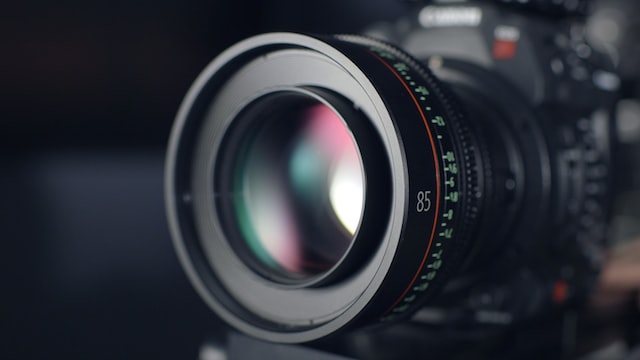
(Image credit: ShareGrid via Unsplash)
Choosing Lens
Buying a lens for your camera is neither an easy nor a superficial matter. Some may argue that it is more
important than the camera itself. If you are looking to buy a lens for your new camera or to upgrade your
current lens or to add a new one to your equipment, you can find yourself lost in a sea of
possibilities.
I am listing down few camera lens basics to help you make the right choice for your photographic needs.
Camera lens basics 📸 ?
→What is the use of camera lens?→Components and Characteristics.
→Types of Camera Lenses.
→How to choose Lens?.
1.What is the use of camera lens?
Camera lenses are made up of a series of glass placed together which are convex and/or concave glass in nature they are used to bring light to a fixed focal point. In a film camera, the lens sends the light directly to the film strip, while in a digital camera like DSLRs, the lens directs light to a digital sensor. Lenses can be fixed with camera body or changeable as in DSLR.If you remove the lens from your camera (DSLR), the only kind of image you can get is full white image.2.Components and Characteristics
Lens filter and focuses the light so that it reached film or digital sensor correctly. There are variety of other factors that determine how a camera lens affect the quality of the photo.a)Focal length : It is the measurement of distance (in millimetres) between the point of convergence of lens and the sensor. The focal length range of a lens is expressed by a number, and that number tells you how much of the area your camera sensor will be able to capture. Smaller the numbers wider the angle of view, that show more of the area; larger the number narrower the angle of view that show lesser area. For example :- a lens of 35mm will have a wider view as compared to 600mm
b)Aperture : It is expressed in f-stops. it means how wide the lens opening is, that lets light in to sensor. F-stops are counter-intuitive, because the larger the number, the smaller is the opening. For example, f/2.8 aperture allows twice as much light into the lens as aperture f4, and 16 times as much light as aperture f11.
Aperture affects the depth of field (Explained below): larger openings create a shallower depth of field, while smaller openings make more of the image in focus. You can find maximum aperture support of a lens on the lens barrel, it indicates the maximum width a lens aperture can open. A lens with a wide maximum aperture is great for low light situations as it captures more light, considered for night photography by many photographers, it cost more but might be worth the investment.
c) Depth of Field : The depth of field (DOF) is the distance between the nearest and the furthest objects that are in acceptably sharp focus in an image captured with a camera. The right aperture also puts your viewer's attention squarely on your subject and regulates your depth of field to get just the right amount of background blur. For example, landscapes are typically shot so that everything is in focus, so photographers will shoot at small apertures (e.g. f11 or f16). Whereas the best portrait lenses have wide apertures of f/2.8 to f/1.2 to get only subject focused and a good shallower depth of field for a perfect blurred background.
3.Types of Camera Lens.
There are two basic categories of camera lens.a)Prime Lens:Primes have a fixed lens focal length, which makes them faster to focus and gives more sharper images. The focal length of prime lenses can be anywhere between 12mm and 5200mm, but it will always remain the same(fixed) means you cannot adjust focal length as per you need(i.e, the field of view is fixed).
b)Zoom Lens: Zoom lenses have movable focal length from a single lens, making them more flexible but not as fast as prime lens. This means that by moving the optical elements inside the lens, you can change the angle of view. With zoom lenses, you can get your subject to appear closer or further away with the turn of a zoom ring without changing your physical distance with the subject.
There are wide variety of lenses prime as well as zoom lenses.
⇒1.Macro Lenses: This type of lenses are used to create very close-up shots, i.e macro photographs. They have a unique placement of glass and design that allows them to produce sharp images at extremely close range. These lenses are great for macro photography, enabling you to capture an enormous amount of detail in one image. For example, 35mm f/1.8 Macro lens.
⇒2.Telephoto Lenses: Telephoto lenses are a type of zoom lens with movable focal length. They are used for focusing in on distant objects. This means that by moving the optical elements inside the lens with the help of zoom ring present on the lens, you can get your subject to appear closer or further away. These types of lenses are great for wildlife and sports photography as these lenses isolate a subject that is far away by zooming. However, such great magnification comes at the price of a narrower field of view. There are many types of telephoto lenses, and some can be quite large, heavy, and expensive, so take some time in choosing the right telephoto lens for you.
⇒3. Wide Angle Lenses: Wide angle lenses are ideal for fitting a large area into your frame. This is especially useful for landscape photography. With wide angle lenses, almost everything is in focus, unless your subject is very close to the lens.
⇒4.Specialty Lenses: There are several types of specialty camera lenses, but a few of the most prominent examples are;
a. Fisheye lens. A fisheye lens is an ultra-wide-angle lens that can take in a full 180 degree radius around it. Fisheye lenses are so named because they distort an images field of view, making even a room in a house look like a bubble.
b. Tilt shift lens. A tilt shift lens distorts perspective, making things look smaller than they really are almost as if they are toys.
c. Infrared lens. These lenses play with light rather than perspective, filtering out all light waves except infrared for a unique visual effect.
4.How to choose Lens?
You have to keep in mind your project needs to select perfect lens for you camera. Wildlife photographers generally use zoom lenses and portrait photographers choose wide angle lenses. I personally use zoom lenses for my wildlife photography. You can have a collection of prime lenses with fixed focal length or have single lens with range of focal length;There are a few important factors to take into consideration when investing in a new camera lens.
1.Cost: lenses are costly, you have to choose wisely. It can get very expensive if you choose a telephoto prime lens. For example AF-S NIKKOR 800mm f/5.6E FL ED VR Lens (approx $16,300). If cost is a concern for you, consider a middle length zoom lens�for example a 24-120mm lens(Nikon). This is a workhorse lens that works well in a variety of situations, from portraits to landscapes and one can also consider sigma or Tamron 150-500/600mm lenses for wildlife photography, they are one of the best cost wise as well as quality wise.
2.Size and weight:Another major factor to consider when buying a lens is how large and heavy lens is. A large telephoto lens can weigh as much as 10 pounds(4.5kgs). Take into account what the purpose of your camera and lens is; if it is simply to take vacation photos, opt for a lighter, more compact one. But if you want lens for wildlife photography, then a telephoto is important for capturing those rare shots from afar.
3.Features: Some lenses offer additional features and functionality. For instance, many lenses have a built-in autofocus feature, which can help you easily achieve the proper focus for your subject. Other lenses offer manual focus, which is more difficult to use, but also better suited to certain situations�for instance, low light conditions.
4.Compatibility:Not all lenses work with every brand or model of camera. For example, a Nikon lens will not work well with a Canon or Sony camera, unless you have an adapter (and even then, not all features will work). Before buying a camera lens, check with the lens manufacturer to ensure that your chosen lens is compatible with your camera body.
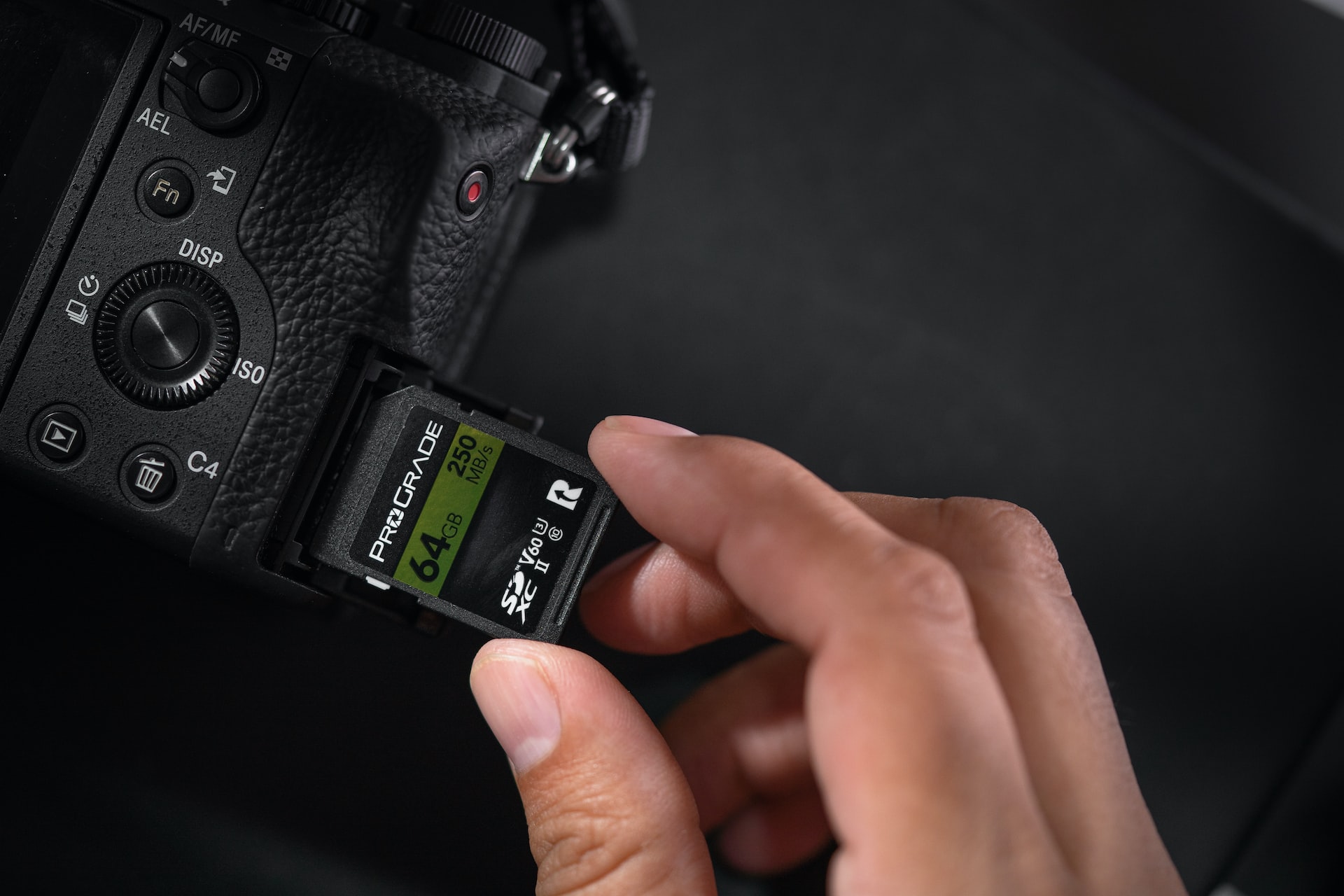
(Image credit: Manuel Chinchilla via Unsplash)
Memory Card
A memory card is an electronic data storage device used for storing digital information, typically using a
flash memory. These are commonly used in digital portable electronic including digital cameras and
choosing the right memory card is an essential step for your photography.
To get the best memory card for your camera, decide the capacity and speed you need. If you don't have the best memory card for your camera, then you are not going to get the most out of your photo projects. With so many options for speed, capacity, brand, compatibility and price available, you might initially feel overwhelmed. However, I have broken down the best memory cards available to show you which ones are best for you. if you are using a newer camera, or one of the professional cameras, then you will likely need to look for a CFexpress or XQD card. However, Compact Flash, microSD and CFast cards are still all regularly used as well. Do check camera manual for type and speed of card that your camera supports for best compatibility.
The most obvious ways to differentiate between memory cards is how much storage they have and what is their reading and writing speed.
Card speed affect how quickly you can transfer images from the memory card to your computer as well as it also impacts the burst mode on your camera. If your memory card is not fast enough, you'll find that it will lag and struggle to accomplish the super-fast shooting speeds that some of the new and latest cameras are capable of. If you come across a cheaper card by a reputable manufacturer, it is likely that the speed of the card may be a limiting factor, do check card speed before buying.
Most digital cameras use SD card with capacities ranging from 4GB to a staggering 1TB. The 32 GB storage capacity will be adequate for most low-mid range camaras and If you shoot a lot of videos on your camera, go for the larger capacity cards. I personally use SanDisk Extreme Pro 64 GB SDHC UHS-I SD Card It has Read speed of 95 MB/s. with 64gb capacity which is perfect for my wildlife photography. You can also purchase High Capacity SDXC Cards such as SanDisk Extreme Pro 128 GB SDXC UHS-I with storage capacity from 128-512 GB as per your need but do check your camera manual for the maximum allowed card capacity.
So lets concentrate on the 5 main types of memory cards for cameras most commonly used today.
1. SDHC Cards: These are the most common and popular type of memory cards for digital cameras. Secure Digital High Capacity (SDHC) cards are usually referred to simply as SD cards, although regular SD cards with only SD lable are actually out dated because they are of older technology, and are limited to 2GB which will be much too less for modern cameras. So if you ever you come across a memory card that is labeled SD, usually in big letters, make sure to avoid it. SDHC memory cards on the other hand provide you with extra capacity with good speed.
2. SDXC Cards: Secure Digital Extended Capacity (SDXC) cards are the industry standard for professional and many wildlife photographers whose cameras support the SD card format.SDXC cards offer faster read/write speeds and higher capacities than any other form of SD card.
3. Micro SDXC Cards: A miniature version of SD card is called as Micro SD Card. They are mostly used in mobile, tablets, action cameras and in drones. Micro SD cards can also be found in SDHC and SDXC varieties. One must consider either the HC(high capacity) or XC(extended capacity) types which are faster and offer more storage.
4. CF Cards: Compact Flash (CF) cards are larger and much more robust than SD cards. They are ageing and are replaced by SD cards in new cameras. but still few cameras still use CF cards such as Canon 5D Mark IV. Do note that some of the card readers do not support CF cards so make sure you double check before buying.
5. XQD Cards: The XQD format cards are new to the market. They have the best features of SD cards and CF cards, and are robust and extremely fast product hence are currently the prefered choice of memory cards for high end cameras such as Nikon D5.
Whatever size of card you choose to purchase for your camera, do remember, always check compatibility with your camera body and always take a backup of your photos whenever you can!

(Image credit: Mylene Tremoyet via Unsplash)
Processing Softwares
Processing or Photo Editing Softwares are the most important component in image processing. These Software
are specially built to help you create and alter images as per necessity. From cropping images to changing
or adding color, such imaging tools and software come to be very handy in nature.
One most important thing to keep in mind is you have to shoot images in RAW formats as RAW format stores
more data in it, it captures uncompressed data from your camera sensor and is easy to process images to
get the desired result and due to the finer gradation of tones and colours you will get better prints from
RAW files.
Here is the list of the popular free photo editing softwares:
⇒Adobe Photoshop Express Editor: For professional editing.
⇒Canva: For quick editing.
⇒GIMP: For entry-level editing.
⇒Fotor: For online editing.
⇒Darktable: For editing with premium features.
⇒Photo Pos Pro: For collages and frames.
⇒Plain(dot)net: For beginners.
⇒Inpixio: For beginners with automatic image correction.
⇒PhotoScape: For basic easy editing.
⇒Pixlr: For retouching images.
Here is the list of the popular paid photo editing softwares:
⇒Adobe Lightroom.
⇒Adobe Photoshop.
⇒Adobe Elements.
⇒DxO PhotoLab.
⇒Corel PaintShop Pro.
⇒Capture One Pro.
⇒ACDSee Photo Studio Ultimate 2022.
⇒CyberLink PhotoDirector.
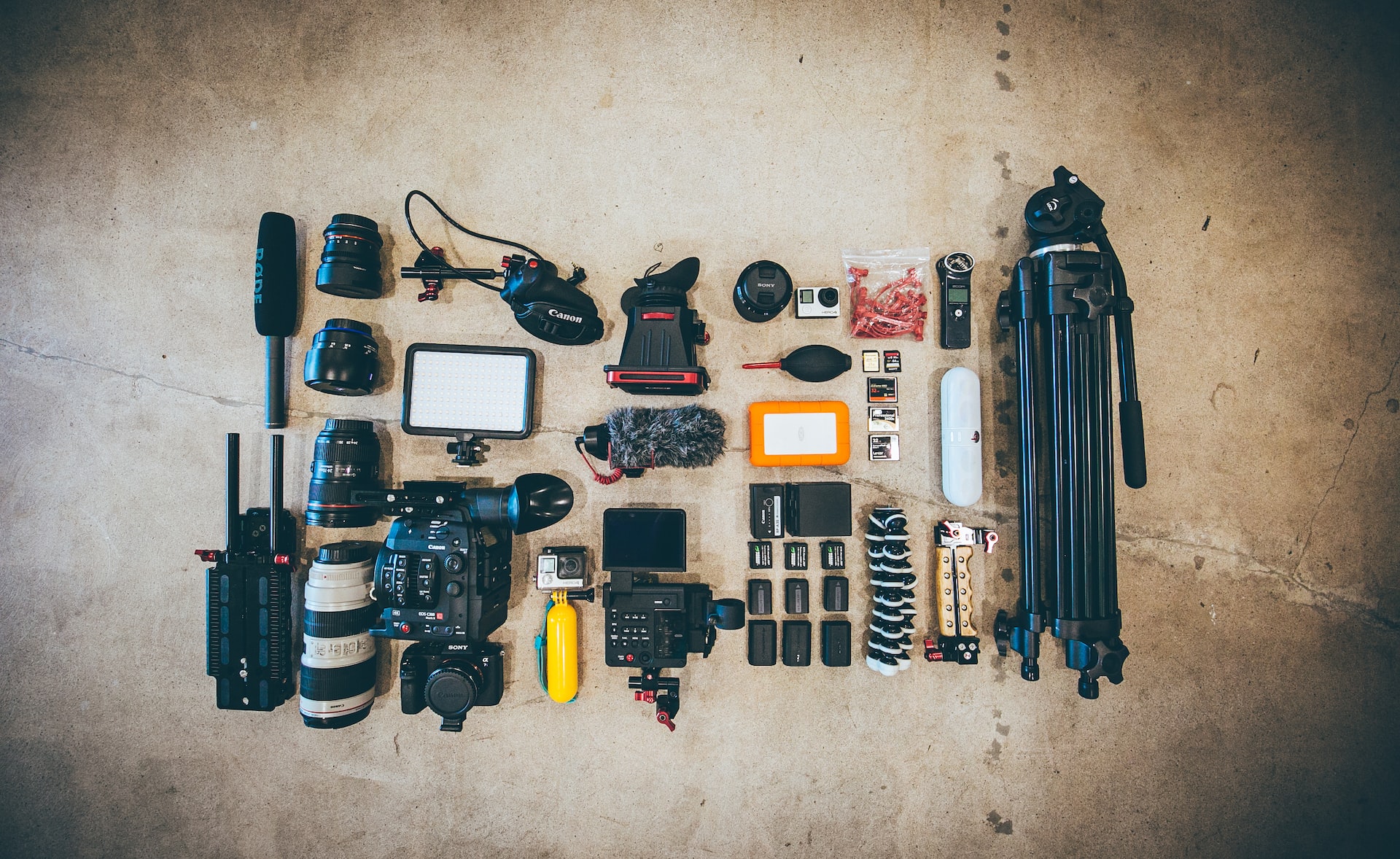
(Image credit: Jakob Owens via Unsplash)
Other Accessories
- Extra Batteries:
A spare extra battery is one of the most essential camera accessories to have with you, particularly if you are traveling, or shooting a long event such as a wildlife or a wedding event. Most professional photographers will have at least a couple of extra batteries with them in their camera bag.
- Tripod:
A tripod is a three-legged stand designed to support a camera. It also have a fluid head that allow camera to pan left and right or tilt up and down. It is used to support, stabilize and elevate a camera equipment. A tripod will let you take better photos when there is not much light available.
- Monopod:
A monopod, also called a unipod, is a single pole used to support cameras, binoculars, or other precision instruments in the field. It is used to support, stabilize and elevate a camera equipment. It is easier to carry and use a monopod than tripod as tripods are more stable, while monopods are more mobile. So if you are on move and want to click along, use a monopod. There are monopods that have leg extensions that make them stand on their own. However, it is not enough to replace a tripod.
- Filters:
lens filters can help improve your images in various ways by minimising glare and reflections, by enhance colours, by reduce light coming into the lens, and much more. Every lens filter is designed to serves a specific purpose. Some filters may have no optical effect at all such as clear protection filters they are used to protect main lens unit. As lenses are precious, fragile and often expensive one should use a clear protection filter to protect it. You can also get a UV filter, which is designed to block out unwanted ultraviolent light to reduce the level of haze in an image.
- Flash:
A flash is a piece of equipment that produces a beam of light for a very short period of time when you release the camera shutter button. A flash light lets you click great pictures in just about any lighting conditions. All compact cameras and most DSLRs have a built-in flash but they are not adequate for all photo conditions. External flash lights give more exposure options, and more control over light conditions for better photography. A flash light is not absolutely necessary but Generally, you will see professional photographers using external flashes or studio strobes instead of the built-in on-camera flash to get perfect pictures. It depends on your project whether you require an external flash light or internal will do the job.
- Bean bags:
Bean bags are bags filled with beans. They mould themselves around any thing kept on it. For expample Beanbag chairs.
In Photography bean bags work the same way but are smaller in size and easy to carry along for shoots. Bean bags are very useful to rest your lens while shooting in difficult terrains. You should place the bean bag under your lens rather than under your camera body. They mould themselves around lens and gives support to lens to stabilize while clicking photos. These bean bags moulds onto whatever surface they are kept on. You can place the camera bean bag on a fence post, on a rock, or on the ground. Most often, I place one on my car door to capture wildlife. They are mostly used by Wildlife photographer during their wildlife safari as they mostly carry heavy lenses along and where setting up a tripod is not an option. If you are in the field and moving around clicking pictures then use a monopod instead of tripod or a bean bag for good result. But if you are driving and suddenly see a moment to capture, you can use your car window frame as a support and use a bean bag to stabilize the camera and start clicking pictures. - Bags and Cases:
Do buy a good camera and lens bag or cases to protect your equipments. This investment is worth every penny. There are various sizes and type of bags and cases available in market carefully chose the size and type with proper padding in the bag. Shoulder bags are among the most popular of camera bags. While many have a good capacity, be careful not to overload a shoulder bag, as it is easy to damage yourself or the equipments by carrying a lot of weight on shoulder all day.
I am listing few types of bags that are mostly used by photographers.
- Waist belts: Waist belts are small, but are very functional specially for compact cameras and mirrorless DSLRs.
- Shoulder bags: Shoulder bags are among the most popular of camera bags. They also comes with different sizes.
- Camera pouches: If you have a small camera body such as compact camera or a mirrorless DSLR or a regular DSLR with small Lens, you may want a camera pouch. These have room for just your camera and a few bits like memory cards and cables.
- Backpacks: This is one of my favourite choices. It can carry additional lenses or body with a laptop and all the important cables required and they are also easy on the back and shoulders and most backpacks have a rain coat too, that protects your equipments with light rains. They also have good padding hence most photographers prefer camera bag packs. With a camera backpack you can carry your camera equipments over long distances without too much trouble it is great bag for the outdoor photographers
- Sling bags: A sling bag is designed to offer the capacity of a backpack and the easy access of a shoulder bag. It has limited capacity and one should not overload sling bags
- Rolling cases: Rolling cases are also known as trolley cases. If you need to store or carry heavy lenses such as 600mm prime lens or 800mm prime lens then is better to use rolling cases for extreme protection of your lenses these cases can survive being dropped, kicked around, run over and even (in some cases) drowned
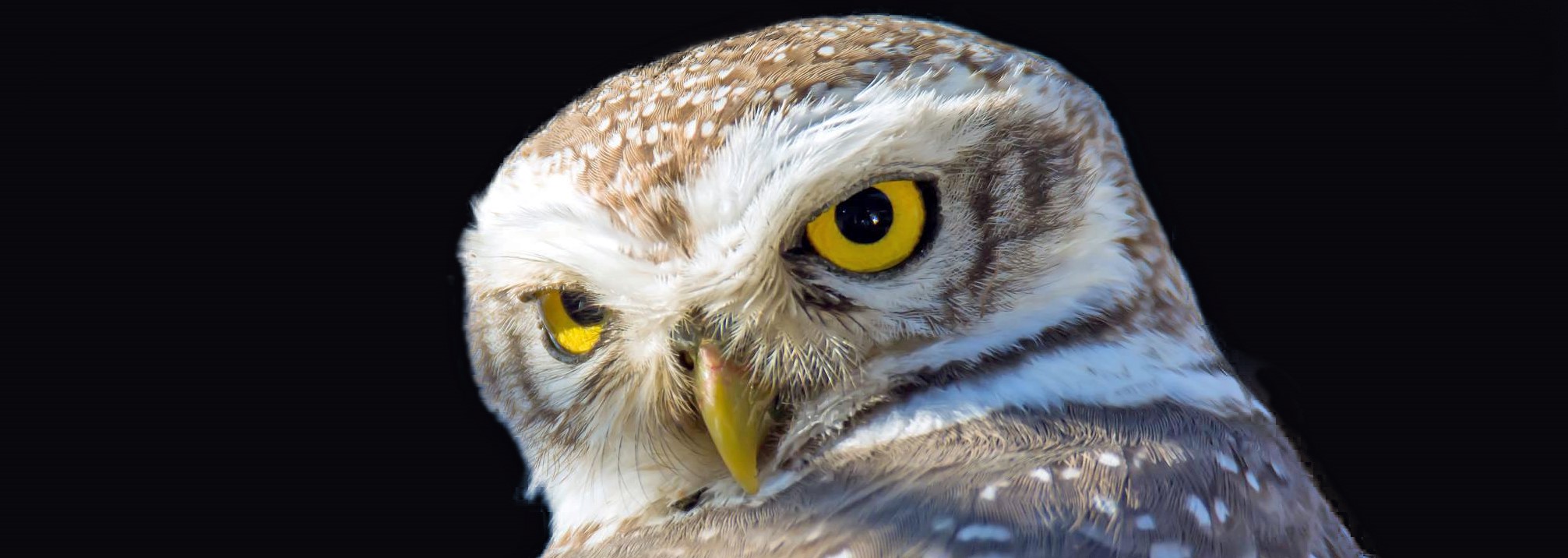
Spotted Owlet from Gir National Park, Gujarat India.
Top birding sites in India
- Salim Ali Bird Sanctuary.
This sanctuary is named after Dr. Salim Ali, the eminent Indian ornithologist. Salim Ali Bird Sanctuary is an estuarine mangrove habitat, which is declared as the bird sanctuary, and is located on western tip of the Island of Chorao along the Mandovi River, Goa, in India. The sanctuary is accessible by a ferry which starts at the Ribandar ferry wharf, about 15mins drive from Panaji, the capital city of Goa. The best time to visit the sanctuary is during the winter months i.e. October to March when the migratory birds that frequent the area are also in residence.
- Best time to visit: October to March.
- By road:To reach this sanctuary, one can take a bus, taxi or private vehicle to reach the Ribandar ferry wharf which is approx. 13 kms from Panaji also known as Panjim, the state capital of Goa, From here, one can cross the Mandovi River via ferry to reach the Chorao Island.
- By train: Karmali(KRMI) Railway Station-9kms, Thivim(THVM) Railway Station-26kms, MADGAON(MAO) Railway Station-37kms.
- By air: The Dabolim International Airport (Goa Airport) is located about 30 Km form Ribandar ferry wharf and is connected with the major cities of India.
- Kumarakom Bird Sanctuary.
Kumarakom Bird Sanctuary also known as the Vembanad Bird Sanctuary is located on the banks of the Vembanad Lake in Kottayam, Kerala, in India. It covers a large area of about 14 acres which is controlled by Kerala Tourism Development Corporation. Kumarakom is one of the most famous tourist attractions in Kerala as its home to many native as well as migratory birds. There is a trail path of about 2 kms to reach the end of the site one can spot different birds while walking on this trail. One can also take a boat ride in the Vembanad Lake and enjoy the views while being surrounded by blue water. There is also an interpretation centre at the entrance of the sanctuary which showcases pictures of different birds that visit throughout the year.
- Best time to visit: November to February.
- By road: Kottayam is the nearest city and is approx 13kms away from sanctuary. Kumarakom Bird Sanctuary is well connected with roads.
- By train: Kottayam railway station is the nearest railway station,It is at a distance of 12 kms, and is connected with all major Indian cities.
- By air: The nearest airport to the sanctuary is the Kochi airport, located just 38 kms away. The airport is connected to all major cities in India.
- Binsar Wildlife Sanctuary.
Binsar is a wild life sanctuary close to Almora, In Kumaon region of Uttarakhand state of India. It is a protected wildlife area comprising dense oak, rhododendron and pine forests on a mountain rising up to 8000 ft. It is a delightful retreat for Wildlife Enthusiasts. The main attraction of Binsar is the majestic and panoramic view of Himalayan peaks. Binsar wildlife Sanctuary is the best place in Uttarakhand for birdwatching and photography.
- Best time to visit: February and April or between October and November.
- By road: Binsar is well connected to major towns of Uttarakhand and from cities in northern India. It is about 25 kms from Almora.
- By train: Kathgodam Railway Station is the nearest railway station to Binsar located at a distance of 105 km from the city and it is connected with all major Indian cities.
- By air: The nearest airport to Binsar is the Pantnagar Airport located 139 km away. It is connected to Delhi with regular direct flight.
- Keoladeo National Park(Bharatpur).
Formerly known as the Bharatpur Bird Sanctuary, the Keoladeo National Park is recognised as one of the worlds most important bird breeding ground. The park is home to over 370 species of birds.Keoladeo National Park offers well defined treks which can be covered on either foot, or cycle or rickshaws. In fact, the park management has trained the rickshaw pullers in bird watching and they make for extremely knowledgeable guides.
- Best time to visit: August to March.
- By road:Keoladeo national park is well connected to major towns of Rajasthan state of India as well as Agra city of Uttar Pradesh state of India. It is about 55 kms from Agra. 183 kms from Jaipur and 200 kms from New Delhi.
- By train:The Bharatpur railway station is about 5 Kms from the bird sanctuary and it is connected with all major Indian cities such as Delhi, Mumbai, Jaipur and Agra.
- By air: The nearest airport to Keoladeo national park is Agra Airport which is 55-kms from park.It is connected to major cities with regular direct flight.
- Bhigwan Bird Sanctuary.
Bhigwan also know as Bharatpur of Maharashtra, is a small town outskirt of Pune city in Maharashtra state of India. Spread across 357 square kilometres, this backwater sanctuary has several designated birdwatching points. You can hire a boat here. A boat safari on the backwater is the best way to see the wetland birds. There are also terrestrial birds and other wildlife to explore in and around Bhigwan bird sanctuary.
- Best time to visit:November to March.
- By road: Bhigwan bird sanctuary is well connected to major towns of Maharashtra state of India. It is about 100 kms from Pune city and 250 kms from Mumbai.
- By train:The nearest railway station is Pune railway station which is about 100 Kms from the bird sanctuary and it is connected with all major Indian cities.
- By air: The nearest airport to Bhigwan bird sanctuary is Pune Airport which is about 102-kms from sanctuary and is connected to major cities with regular flight.
- NalSarovar Bird Sanctuary.
NalSarovar Bird Sanctuary, consisting of a 121 sq-km lake and ambient marshland with shallow waters (4-5 ft) which contains many small islands, is situated about 64 km to the west of Ahmedabad near Sanand Village, in the Gujarat state of India. It is the largest wetland bird sanctuary in Gujarat and one of the largest in India. Sanctuary is home to more than 250 species of migratory birds and resistant birds. Nalsarovar is a bird watchers paradise, one can find rosy pelicans, lesser and greater flamingos, crakes, brahminy ducks, purple moorhen, herons, white storks, various species of bitterns, grebes etc in the lake.
- Best time to visit:November to February.
- By road:NalSarovar Bird Sanctuary is well connected to major towns of Gujarat state of India. It is about 64 kms from Ahmedabad city.
- By train:The nearest railway station is Ahmedabad (Kalupur) railway station which is about 66 Kms from the bird sanctuary and it is connected with all major Indian cities.
- By air: The nearest airport to NalSarovar Bird Sanctuary is Ahmedabad Airport which is about 75kms from sanctuary and is connected to major Indian cities with regular flight.
- Tip: For a better accommodation, it is advisable to stay in Ahmedabad city. Nalsarovar bird sanctuary timings are from 6 am to 6 pm. Private vehicles are not allowed past the ticket window area but Vehicles are available from parking to the lake site, which is approx 1 km. Entry fee is Rs. 75/- per visitor on weekdays and Rs. 85 on weekends and Rs. 200/- for camera(mobile cameras).Nalsarovar Boating charges are Rs. 220/- per person and Rs. 1320/- for an individual boat. Guide charges are Rs. 400 to Rs. 500.
- Eaglenest wildlife sanctuary.
Eaglenest or Eagle's Nest Wildlife Sanctuary is a protected area of India in the Himalayan foothills of West Kameng District of Arunachal Pradesh. It is a pristine mountain forests with dense canopies and a dream for Bird watchers. With an area of 218 sq km,The altitude range of Eaglenest varies from 500 m to 3300 m. It is home to at least 454 species of birds. One can find birds such as Bugun liocichla, Wards Trogon, Beautiful Nuthatch, Barwing, Many species of Wren Babblers,Shortwings and Trogopans. Rufous-necked Hornbill, Sikkim Wedge-billed Babbler, and many species of Laughing Thrush, Great and Lesser Rufous-headed Parrotbill and many more.
- Best time to visit:October to April.
- By road: Eaglenest wildlife sanctuary is well connected to popular towns like Tawang 230km, Tezpur 100km, and Bomdila 55km.
- By train:The nearest railway station to Eaglenest wildlife sanctuary is Bhalukpong which is at a distance of 114 km. Hiring a cab to the sanctuary is highly recommended.
- By air: The nearest airport to Eaglenest wildlife sanctuary is Tezpur Airport which is about 100kms from sanctuary and Guwahati Airport (250 km) is another renowned international airport close to the sanctuary.
- Tip: Everyone must have a permit to enter restricted areas of Arunachal Pradesh. For Indians nationals, it is Inner Line Permit, and for the foreigners, it is Restricted Area Permit. One can get the permit issued from the office of Deputy Resident Commissioner. The Inner Line Permit can also be obtained from The Secretary (Tourism), Government of Arunachal Pradesh, Itanagar- 791 111. The bird watching tours are mostly organized by Bompu Camp, Sessni Camp, and Lama Camp there are not much of stay option other than these camps
- Kitam Bird Sanctuary.
Kitam Bird Sanctuary is a protected sanctuary located at Kitam near Namchi in Sikkim state in India.It lies between 1200 feet and 3200 feet above sea level, situated between Namchi and Melli, it is recognized as one of the most prominent bird sanctuaries in Sikkim. Kitam Bird Sanctuary occupy an area of more than 6 square kilometers within thick vegetation of shrubs, sal and pine trees. Kitam Bird Sanctuary is a heaven for bird lovers and attracts tourists around the year for birding. Kitam bird sanctuary remain open throughout the year. It is home to over 200 species of birds. The sanctuary has 4 trails for bird-watching. There are also few watch towers and viewpoints in this sanctuary that are ideal for bird watching.
- Best time to visit: It can be visited around the year due to low altitude and moderate climate. The autumn and winter season (October to November) is best time to visit Kitam as the entire sanctuary covered with migratory birds in this season.
- By road: Kitam Bird Sanctuary is well connected to popular towns of Sikkim. It is about 12kms from Nachim and about 56kms from Darjeeling, West Bengal
- By train:The nearest railway station to Kitam Bird Sanctuary is New Jalpaiguri(NJP) which is at a distance of 80 km. Hiring a cab to the sanctuary is highly recommended.
- By air: The nearest airport to Kitam Bird Sanctuary is Bagdogra Airport in the state of West Bengal, which is about 82kms from sanctuary. Daily flights are available from and to all major India cities.
- Tip: For night stay at Kitam, one can choose from a wide choice of homestays that the village folk offer and can experience traditional Sikkimese hospitality in these homestays, as well as gain insights into their local culture. They also organize bird watching tours and local treks.
- Chilka Lake Bird Sanctuary.
Chilka Lake in state of Odisha India, is one of the biggest salt water lakes in Asia with few small islands, separated from the Bay of Bengal. It also imbibes one of the most supportive ecosystem in the name of Chilka Lake Bird Sanctuary. Chilka Lake is paradise for the bird-lovers and ornithologists since the whole vicinity attracts large number of aquatic birds preferably in winters. Chilka Lake Bird Sanctuary is also one of biggest breeding places of flamingos in the world.
- Best time to visit:October to March.
- By road: Chilka Lake Bird Sanctuary is well connected to popular towns of Odisha. It is about 110kms(Satapada) from Bhubaneswar, about 100kms(Satapada) from Brahmapur and 48kms(Satapada) from Puri.
- By train:The nearest railway station to Chilka Lake Bird Sanctuary is Balugaon which is at a distance of 33km(Rambha).
- By air: The nearest airport is Bhubaneswar Airport which is located at 120 km away from where taxis and buses are available towards the lake. Daily flights are available from and to all major India cities.
- Tip: For night stay at Chilka, one can choose from a wide choice of homestays and hotels on the banks of lake that have stunning views and a relaxed vacation ambience.
- Thattekad Bird Sanctuary.
The Thattekkad Bird Sanctuary, covers an area of approx. 25 km, and located about 12 km from Kothamangalam taluka of Ernakulam district on the northern bank of the Periyar River in State of Kerala, India. It was the first bird sanctuary in Kerala. Dr. Salim Ali, one of the best known ornithologists, has described this sanctuary as the richest bird habitat on peninsular India and it was named as a Bird Sanctuary in the year 1983. Thattekkad Bird Sanctuary is covered with tropical deciduous and evergreen trees and is a paradise for birds. It shelters over 500 species of birds and rare birds such as Wayanad laughingthrush, rufous babbler, and white-bellied blue flycatcher. Hence, it is a place worth visit for bird lovers and wildlife enthusiasts.
- Best time to visit:October to March.
- By road: Thattekkad Bird Sanctuary is well connected to popular towns of Kerala. It is about 65 Kms from Eranakulam.
- By train:The nearest railway station to Thattekkad Bird Sanctuary is Aluva which is at a distance of 50km and Ernakulam which is about 65kms.
- By air: The nearest airport is Kochi International Airport which is located at 60 km away from where taxis and buses are available towards the sanctuary. Daily flights are available from and to all major India cities.